
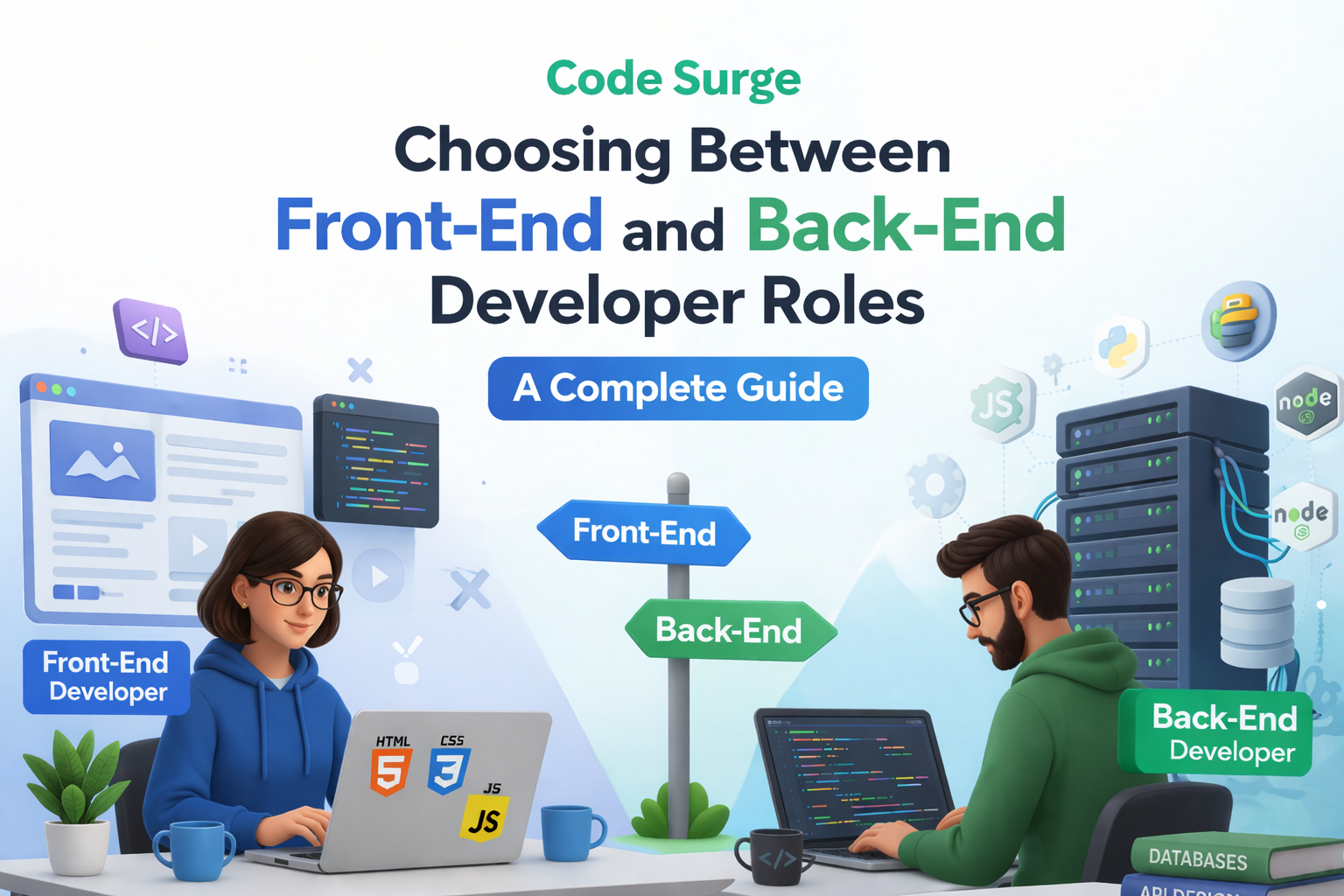
In the fast-moving world of web development, choosing the right career path can feel confusing, especially when you're trying to decide between front-end development and backend development. Both roles are important in creating modern websites and web applications, but they involve different skills, tools and responsibilities.
If you're planning a future in this field, understanding the difference between front-end and backend development will help you make a smarter and more confident choice. Platforms like Code Surge support aspiring developers by providing guidance, tools and real-world exposure to build strong careers in software development and IT solutions.
Role Of A Front-End Developer
A front-end developer designs and develops the screens and functions that users see and interact with. This includes the layout, buttons, menus, forms, images and everything else that shapes how a website looks and feels.
Front-end development uses technologies like HTML, CSS and JavaScript, which are the basic building blocks of web pages. Developers also use frameworks like React, Vue.js or Angular to create dynamic and smooth user experiences (UX/UI design).
If you have an interest in design, like making things visually appealing and want to create a user-friendly website experience, then front-end development might be the right choice. It also involves working closely with designers and thinking about how users behave on different devices, including smartphones, tablets and desktops.
More importantly, attention to detail and creativity are crucial traits in this role. With the support of companies like Code Surge, developers can enhance their front-end skills through practical projects and exposure to modern web design trends and responsive web development.
Role Of A Back-End Developer
It is the backend developer’s job to develop the logic of each feature on how they work, making the website function without any faults. They handle the logic of the website or app, manage databases, and make sure all the data moves correctly between users and servers.
Backend developers use languages like Node.js, Python, PHP, or Java to code the logic of all functionalities. They often set up and manage databases such as MySQL, PostgreSQL, or MongoDB, and they also build APIs (application programming interfaces) that allow the front end and backend to communicate.
If you enjoy solving tough problems, figuring out how systems work, and creating solid, secure structures, backend development could be your ideal path. It’s less about design and more about functionality and making the website logic run flawlessly.
Organizations like Code Surge provide opportunities to work on real-world backend systems, helping developers strengthen their expertise in backend technologies, API development and cloud-based applications.
Choose Which Role Is Right for You
When deciding which role suits you better, think about your interests and strengths. If you enjoy visuals and user interaction, front-end development might be a natural fit. If you're more into logical thinking, data, and making things work behind the scenes, then backend development might feel more satisfying. Also, consider your learning style. Front-end development is usually easier to pick up quickly but requires staying updated with changing design trends. Backend development may take longer to learn, but the core concepts stay more stable over time.
With guidance from platforms like Code Surge, learners can explore both paths and gain hands-on experience in full stack development, making it easier to choose the right career direction.
The Growing Demand for Web Dev Specialists
The good news is that both roles are in high demand. With more businesses moving online, the need for skilled web developers, software engineers and IT professionals continues to grow globally.
Many developers start with one specialization and later expand their skills to become full stack developers, who can handle both front-end and backend development. Companies like Code Surge play a key role in bridging the gap between learning and industry by offering real-world projects and career-focused development opportunities.
Conclusion
In the end, whether you become a front-end developer or a backend developer, you’re choosing a career full of opportunity. The key is to start learning, build projects, and continuously improve your skills.
Web development is not just about code, it's about solving real-world problems, building scalable systems and creating meaningful digital experiences. With the right support from platforms like Code Surge, you can grow into a successful professional in the ever-evolving world of web development and software engineering.
Visit : https://codesurge.global/