
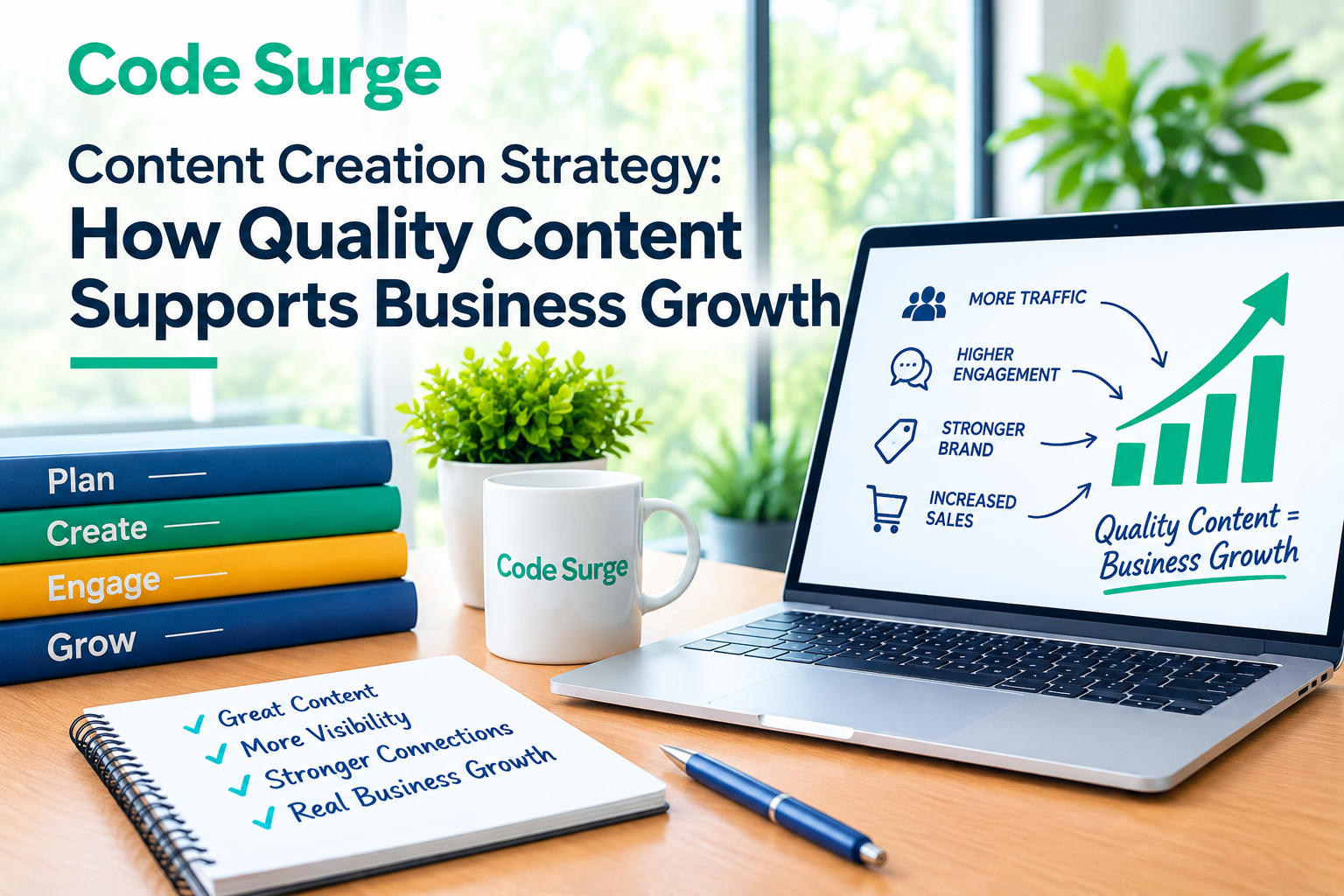
In today's digital-first business environment, having a website and social media profiles is no longer enough. Businesses need useful, relevant and engaging content to attract potential customers, build trust and remain visible across Google, social media and other digital platforms.
This is where a well-planned content creation strategy becomes important.
From website content and SEO blog articles to social media posts, videos, graphics and other digital assets, quality content helps businesses communicate their value and connect with the right audience at different stages of the customer journey.
For businesses in Sri Lanka, investing in professional content creation services can also support organic search visibility, brand awareness, website engagement and lead generation.
What Is Content Creation?
Content creation is the process of researching, planning, producing and publishing digital content for a specific audience and business objective.
Depending on the business, content can include:
-
Website content
-
SEO blog articles
-
Social media posts
-
Short-form videos and reels
-
Infographics
-
Promotional graphics
-
Product and service descriptions
-
Case studies
-
Educational guides
-
Email content
-
Video scripts
-
Brand storytelling
-
Landing page content
Effective content creation is not simply about producing more posts. The content should answer real questions, address customer needs and support a clear business goal.
For example, a service-based business may use educational blog articles to attract people searching for solutions on Google, while social media content can help demonstrate expertise and build relationships with potential customers.
Why Is Content Creation Important for Business Growth?
A consistent content strategy can support several areas of digital growth.
1. Content Improves Online Visibility
Search engines need useful information to understand what a website is about and which searches it may be relevant for.
Publishing helpful, topic-focused content gives a business more opportunities to appear for relevant searches.
For example, instead of relying only on a service page targeting “web development,” a web development company could create supporting content around:
-
Web development services
-
Website development for businesses
-
E-commerce website development
-
Website performance
-
Mobile-friendly websites
-
Website security
-
Website development costs
-
How to choose a web development company
This creates a broader content ecosystem around the business's expertise.
For a company investing in SEO services, content can therefore become an important part of its organic search strategy.
2. Quality Content Builds Brand Authority
People often research a company before contacting or purchasing from it.
Helpful content allows businesses to demonstrate knowledge before a potential customer becomes a lead.
A software development company, for example, could publish content explaining APIs, cloud solutions, mobile app development, e-commerce technology or cybersecurity.
When this content genuinely helps users understand a topic, it can strengthen the brand's position as a knowledgeable business within its industry.
Code Surge combines technology and digital services for businesses, with its website highlighting areas including SEO, web development and mobile applications.
3. Content Supports the Customer Journey
Not every website visitor is ready to contact a business immediately.
Different customers may be at different stages of the buying journey.
A useful content strategy can address each stage.
Awareness stage
The customer is identifying a problem.
Examples:
-
What is e-commerce development?
-
How can a business improve website performance?
-
Why is SEO important?
Consideration stage
The customer is comparing possible solutions.
Examples:
-
Custom website vs template website
-
SEO vs paid advertising
-
How to choose a web development company
Decision stage
The customer is looking for a service provider.
Examples:
-
Web development services in Sri Lanka
-
SEO services in Sri Lanka
-
Content creation services
-
Mobile app development company
By creating content for different stages, businesses can attract potential customers earlier and guide them toward a service or enquiry page.
Content Creation and SEO: How Do They Work Together?
Content creation and SEO work best when they are planned together.
SEO helps businesses understand what their target audience searches for, while content provides useful information that can address those searches.
A strong SEO content strategy can include:
-
Keyword research
-
Search intent analysis
-
Topic research
-
Competitor content analysis
-
Content planning
-
Helpful content creation
-
Internal linking
-
On-page SEO
-
Performance monitoring
-
Content updates
For example, a business targeting “web development services Sri Lanka” could create a main service page and then support it with relevant articles about website development, e-commerce websites, mobile responsiveness, website security and website performance.
The supporting articles can naturally link back to the relevant service page.
This creates a stronger topical relationship between the content and the commercial service.
What Types of Content Should a Business Create?
There is no single content format that works for every business.
The right mix depends on the target audience, industry, marketing objectives and available resources.
Website Content
Website content explains what a business does and why potential customers should consider its services.
Important pages may include:
-
Homepage
-
About page
-
Service pages
-
Product pages
-
Industry pages
-
Location pages
-
Landing pages
-
Contact page
Strong website copy should communicate the value of the service while naturally incorporating relevant search terms.
SEO Blog Content
Blog articles can help businesses answer questions and target informational search queries.
Examples include:
-
How-to guides
-
Industry insights
-
Comparisons
-
FAQs
-
Beginner guides
-
Trend articles
-
Problem-solving articles
The focus should be on providing useful information rather than publishing articles simply to insert keywords.
Social Media Content
Social media content can help businesses stay visible and engage with existing and potential customers.
Depending on the audience, this may include:
-
Educational posts
-
Short videos
-
Reels
-
Customer stories
-
Product demonstrations
-
Company updates
-
Industry tips
-
Behind-the-scenes content
-
Promotional campaigns
Video Content
Video can communicate complex ideas quickly and provide another way for audiences to interact with a brand.
Businesses can create:
-
Explainer videos
-
Product demonstrations
-
Tutorials
-
Customer testimonials
-
Short-form videos
-
Company videos
-
Educational videos
A single long-form piece of content can also be repurposed into several shorter formats for social media and other channels.
How to Build an Effective Content Creation Strategy
Creating content without a strategy can result in inconsistent publishing and limited business value.
A more effective approach starts with planning.
Step 1: Define Your Target Audience
Before creating content, identify who you want to reach.
Consider:
-
Who are your ideal customers?
-
What problems do they have?
-
What services are they looking for?
-
What questions do they ask?
-
What information do they need before contacting a business?
Understanding the audience helps determine what topics and formats are worth producing.
Step 2: Research Relevant Keywords and Topics
Keyword research helps identify the language potential customers use when searching.
Instead of focusing on only one high-volume keyword, create groups of related topics.
For example, a business offering digital services could target related searches around:
-
Digital marketing services
-
SEO services
-
Content creation
-
Social media marketing
-
Website development
-
E-commerce development
-
Mobile app development
These topics can then be developed into service pages, supporting blog content and other digital assets.
Step 3: Match Content With Search Intent
A keyword alone is not enough.
You also need to understand what the searcher actually wants.
Someone searching for “what is SEO” needs educational information.
Someone searching for “SEO services Sri Lanka” is much closer to finding a service provider.
Creating the wrong type of content for the search intent can limit its ability to attract the right audience.
Step 4: Create People-First Content
High-quality content should be created primarily to help people, not simply to manipulate search rankings.
Each article should aim to answer the user's question clearly and provide information that is useful beyond the search result itself.
This is especially important as search experiences increasingly include AI-generated answers. Google continues to emphasize helpful, reliable and people-first content as part of its Search guidance.
Step 5: Add Relevant Internal Links
Internal linking helps users discover related information and helps search engines understand the relationship between pages.
For example, an article about content strategy can naturally link to Code Surge's Content Creation Services when discussing professional content production.
Readers who want to learn more about the company can also explore the About Code Surge page.
Businesses interested in the technology side of Code Surge's services can explore Code Tech, while visitors can browse additional resources through the Code Surge Blog.
For readers ready to discuss a project, the Contact Code Surge page provides the next step.
These links should be placed where they genuinely help the reader rather than adding links simply for SEO purposes.
Step 6: Repurpose High-Value Content
One well-researched article can become multiple pieces of content.
For example:
One blog article →
-
LinkedIn post
-
Facebook post
-
Instagram carousel
-
Short-form video
-
Infographic
-
Email newsletter
-
Video script
-
FAQ content
This allows businesses to get more value from the research and creative work invested in the original content.
Step 7: Measure Content Performance
Publishing content is only the beginning.
Businesses should monitor metrics such as:
-
Organic impressions
-
Organic clicks
-
Keyword rankings
-
Organic traffic
-
Engagement
-
Conversions
-
Enquiries
-
Leads
-
Assisted conversions
The goal is not simply to publish more content. The goal is to understand which content contributes to visibility, engagement and business outcomes.
How Content Can Support AI Search Visibility
Search is evolving beyond traditional blue-link results.
People increasingly use AI-powered search experiences and conversational tools to discover information, compare options and research businesses.
This means businesses should think about whether their content is:
-
Clear and factually useful
-
Well structured
-
Easy to understand
-
Directly answering common questions
-
Supported by relevant evidence where appropriate
-
Connected to the business's expertise
-
Consistent with information across the website
Google's current Search documentation includes guidance around AI features and emphasizes that its existing search quality and spam principles also apply to AI-generated search experiences.
This does not mean creating content specifically to “trick” AI systems.
Instead, businesses should focus on building genuinely useful, authoritative and understandable resources that can be discovered, understood and referenced across modern search experiences.
Common Content Creation Mistakes Businesses Should Avoid
Publishing Without a Strategy
Posting randomly makes it difficult to build topical authority or consistently reach the right audience.
Focusing Only on Keywords
Keywords are useful for understanding search demand, but content written only around keyword insertion can become repetitive and unhelpful.
Creating Thin Content
Short articles that provide little original value are unlikely to satisfy users looking for detailed answers.
Ignoring Existing Content
Businesses often continue publishing new articles while older pages become outdated.
Updating existing content can be an important part of a sustainable content strategy.
Writing for Everyone
Content becomes stronger when it is written for a clearly defined audience and purpose.
Forgetting the Conversion Path
Informational content should not become a dead end.
When relevant, users should have a clear next step, such as viewing a service, contacting the business or learning more about a related topic.
Why Businesses in Sri Lanka Need a Local Content Strategy
Sri Lankan businesses compete in a market where customers increasingly research products and services online before making decisions.
A local content strategy can help businesses address topics and questions that are relevant to their target customers in Sri Lanka.
For example, content can be developed around:
-
Services in Sri Lanka
-
Local customer needs
-
Sri Lankan industries
-
Local business challenges
-
Colombo and other relevant locations
-
Local search behaviour
-
Industry-specific terminology
-
Sinhala, Tamil and English audiences where appropriate
However, adding “Sri Lanka” to every paragraph is not an SEO strategy.
The content should first be useful to the intended audience, with local context added where it genuinely improves relevance.
How Code Surge Can Help With Content Creation
A successful content strategy requires more than writing individual blog posts.
It involves research, planning, content production, SEO, design and ongoing optimisation.
Code Surge provides digital solutions across areas including SEO, web development and mobile applications, while its website also provides a dedicated content creation service for businesses.
If your business needs a structured approach to website content, blog articles, digital content or other content marketing requirements, you can explore Code Surge's Content Creation Services.
You can also learn more about Code Surge or explore the company's technology capabilities through Code Tech.
For additional digital insights, visit the Code Surge Blog.
Final Thoughts
Content creation is not simply about filling a website or social media calendar with new posts.
A successful content strategy connects audience needs, search intent, business goals and useful information.
When content is properly researched, created, optimised and distributed, it can support organic search visibility, brand authority, audience engagement and lead generation.
For businesses in Sri Lanka, a consistent and strategic approach to content creation and content marketing can become an important part of long-term digital growth.
The objective should not be to create the most content.
It should be to create the right content for the right audience at the right stage of their journey.
Frequently Asked Questions
What is content creation?
Content creation is the process of researching, planning, producing and publishing content for a specific audience and business objective. It can include website copy, blog articles, social media posts, videos, graphics, email content and other digital formats.
Why is content creation important for businesses?
Content can help businesses improve online visibility, communicate their expertise, educate potential customers, build trust and support lead generation.
What is the difference between content creation and content marketing?
Content creation focuses on producing useful content, while content marketing includes the broader strategy of using that content to attract, engage and convert a target audience.
Does content creation help SEO?
Yes. Well-planned content can help a website target relevant search topics, answer user questions, build topical relevance and attract organic search traffic. However, content alone does not guarantee rankings; technical SEO, website quality, relevance and other search factors also matter.
How often should a business publish content?
There is no universal publishing frequency. Businesses should prioritize consistent, useful and relevant content rather than publishing a large volume of low-quality articles.
Can one piece of content be used across multiple platforms?
Yes. A strong piece of content can often be repurposed into social media posts, videos, graphics, newsletters, FAQs and other formats, helping businesses extend its value across different channels.
Can content help a business appear in AI search results?
Useful, clear and trustworthy content can contribute to a website's overall search visibility, including modern AI-powered search experiences. Businesses should focus on creating helpful content rather than trying to manipulate AI systems.